Blog
For Malaysian landlords, choosing the right way to market and fill a vacant room or rental unit is an important business decision. Many owners compare a rental agency with property agents for rentals, but the best option depends on the type of property you manage, how hands-on you want to be, and how quickly you need qualified tenant enquiries.
If you own one unit, a few rooms, or an entire portfolio, the right partner can help improve occupancy and reduce vacancy periods. At the same time, the wrong approach can lead to slow responses, unclear rental terms, poor-quality listings, or wasted marketing effort. This article breaks down the key differences, pros and cons, and decision points so Malaysian landlords can choose more confidently.
What Is a Rental Agency?
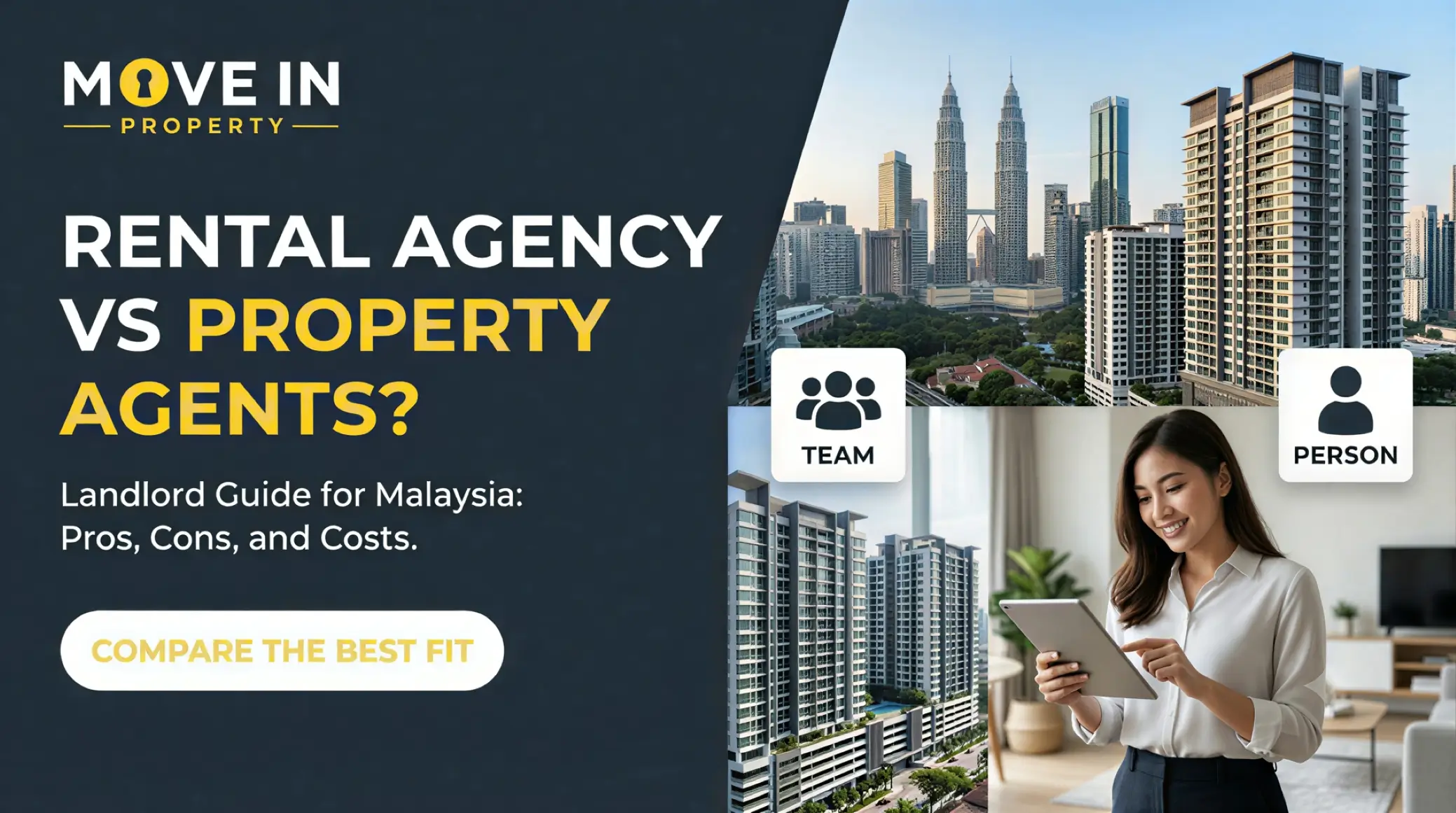
A rental agency usually focuses on helping landlords promote rental properties, attract tenant enquiries, and support the leasing process. Depending on its business model, a rental agency may specialise in room rentals, co-living spaces, student accommodation, or broader residential rental marketing.
In practice, a rental agency often works as a more structured rental-focused service. It may offer listing support, lead generation, marketing exposure, tenant enquiry handling, and tools that make it easier for landlords or operators to manage multiple listings.
For room operators and landlords with frequent turnover, a rental agency can be especially useful when it is built around speed, visibility, and direct tenant contact channels such as WhatsApp or enquiry forms.
What Are Property Agents for Rentals?
Property agents for rentals are individual agents or negotiators who help landlords find tenants for available properties. A rental property agent often works more personally with the landlord, handling viewings, conversations with prospects, and parts of the negotiation process.
This route is common for landlords who prefer one-to-one service. Instead of relying mainly on a platform or marketing system, the landlord works with a person or small team that introduces prospective tenants and helps move the rental forward.
For some properties, especially those needing more explanation or guided viewings, this can be a practical choice. However, the outcome often depends heavily on the individual agent’s responsiveness, network, and understanding of the rental market segment.
Rental Agency vs. Property Agents for Rentals: The Core Difference
The simplest way to understand the difference is this:
- A rental agency is often a rental-focused system, platform, or organised service designed to generate and manage tenant enquiries at scale.
- Property agents for rentals are usually individuals or agency representatives who personally market and match properties to tenants.
Both can help fill vacancies. The main difference lies in the operating style. One is often process-driven and marketing-oriented, while the other is usually person-driven and relationship-oriented.
Key Comparison Criteria for Malaysian Landlords
1. Speed of Listing and Go-to-Market
If speed matters, a rental agency often has the advantage. A landlord or operator can usually prepare listings quickly by uploading high-quality property photos and accurate room details such as price, location, facilities, and availability. This is especially valuable for landlords managing several rooms at once.
With a more digital-first setup, listings can go live faster and start receiving tenant enquiries sooner. This is helpful for room rentals, co-living units, and high-turnover properties.
By comparison, a rental property agent may take more time to gather information, arrange visuals, and manually promote the listing. That does not mean the method is ineffective, but it can be slower if the process depends on individual schedules.
2. Marketing Reach
A rental agency may provide stronger overall marketing reach, especially when it supports search visibility, digital advertising, and listing exposure across multiple channels. For landlords who want ongoing enquiries rather than one-off referrals, this can be a major advantage.
Some rental-focused platforms also help landlords benefit from better content presentation, easier tenant browsing, and direct enquiry options. This matters because tenants often compare multiple listings quickly and choose the ones with clear information and simple contact methods.
Property agents for rentals can also market listings, but reach may depend on the agent’s personal database, network, and activity level. For niche or premium properties, that personal reach may still work well. For volume-based room rental businesses, however, a broader marketing engine may be more effective.
3. Lead Handling and Enquiry Flow
Many landlords today want fast, direct communication. A strong rental agency setup often includes clear contact methods such as WhatsApp, phone, or enquiry forms to encourage immediate tenant action. This is useful because delays in response can cause prospects to move on quickly.
Direct tenant-to-operator communication can also reduce unnecessary friction. If a tenant sees the room details clearly and can contact the landlord or operator right away, the path from interest to viewing becomes shorter.
In contrast, when using property agents for rentals, all communication may go through the agent first. That can be helpful if the landlord wants less involvement, but it can also create delays if the agent is managing many listings at once.
4. Suitability for Different Property Types
Not all rental methods suit all property types equally.
| Property Type | Rental Agency | Property Agents for Rentals |
|---|---|---|
| Single residential unit | Good if the owner wants broad visibility and direct leads. | Good if the owner wants personalised support. |
| Multiple rooms in one property | Very suitable for frequent updates and consistent lead flow. | Can work, but may be less efficient at scale. |
| Co-living or hostel-style setup | Highly suitable due to high listing volume and tenant turnover. | May depend on the agent's experience in this market segment. |
| Student accommodation | Strong fit when listings are detailed and easy for tenants to contact. | Helpful for guided tenant matching and support. |
| Corporate housing | Useful for maintaining consistent visibility. | Useful if negotiation and relationship handling matter. |
Landlords with repeated vacancies or multiple rooms often benefit more from a repeatable listing and lead-generation system. Those with a single property and a preference for personalised support may prefer a traditional agent-led approach.
5. Control Over Listing Quality
Whether you use a rental agency or a rental property agent, listing quality matters. High-quality property photos, accurate pricing, location details, facilities, and availability should always be included. Without these basics, tenant trust drops quickly.
A rental agency model may make it easier to standardise listing quality across multiple properties. This is useful for landlords and operators who want consistent branding and presentation.
With property agents for rentals, quality can vary depending on the individual preparing the listing. Some agents create excellent listings, while others may use limited descriptions or outdated information. For landlords, this means closer monitoring may be needed.
6. Trust and Credibility
Trust is one of the biggest factors in rental conversions. Tenants want transparent rental information, genuine reviews when available, and confidence that the listing is real. Landlords also want to avoid wasted enquiries from uncertain prospects.
A rental agency that includes trust-building features such as verified operator badges, genuine reviews, and transparent rental information can strengthen credibility. This is especially valuable in markets where tenants are cautious about scams or misleading ads.
Property agents for rentals may build trust through personal communication and guided explanations. This can work well, but it depends on the professionalism of the agent. If the agent is slow, unclear, or inconsistent, trust can be affected.
7. Scalability for Growing Landlords
Scalability is a major point of difference. If you plan to grow from one property to several units or rooms, a rental agency approach is often easier to scale. A structured system for listing, updating availability, and receiving leads can support growth without increasing complexity too much.
By contrast, relying only on individual property agents for rentals may become harder to manage as your portfolio expands. You may need to coordinate multiple agents, track multiple conversations, and monitor listing consistency across several properties.
For landlords running a rental business rather than just renting out a spare property, this difference is significant.
Advantages of Using a Rental Agency
- Faster listing management: Useful for room operators and landlords with frequent vacancies.
- Stronger marketing support: Better suited for ongoing visibility and tenant lead generation.
- Direct contact options: WhatsApp, phone, and enquiry forms help speed up response time.
- Consistent presentation: Easier to standardise photos, details, and facilities across listings.
- Better scalability: Suitable for single-property owners and multi-property operators alike.
- Trust-building features: Verified profiles and transparent information can improve tenant confidence.
Disadvantages of Using a Rental Agency
- Less personal handholding: Some landlords may prefer an individual advisor rather than a platform-led process.
- Self-management may still be needed: In some setups, owners handle parts of the tenant conversation themselves.
- Results still depend on listing quality: Poor photos or missing details can weaken performance even on a good platform.
Advantages of Using Property Agents for Rentals
- Personalised service: Helpful for landlords who want one point of contact.
- Assistance with viewings and negotiation: Can reduce the landlord’s direct workload.
- Useful for unique properties: Some listings benefit from guided explanation and targeted matching.
- Relationship-driven approach: A good agent may understand the landlord’s preferences well over time.
Disadvantages of Using Property Agents for Rentals
- Performance varies by individual: Results depend heavily on the agent’s commitment and skill.
- Potentially slower communication: Tenant enquiries may need to pass through a middle layer.
- Harder to scale: Managing multiple agents across many rooms or units can become inefficient.
- Inconsistent listing quality: Some agents may not maintain updated details or strong visuals.
Which Option Is Best for Different Types of Malaysian Landlords?
Best for Single-Unit Owners
If you own a single apartment, condo, or house and want personal support, property agents for rentals may be a comfortable choice. A trusted agent can help with communication, viewings, and follow-up.
However, if you are comfortable handling direct enquiries and want broader exposure, a rental agency can also work very well.
Best for Room Operators
For landlords renting out multiple rooms, a rental agency is often the better fit. Room-based businesses usually need frequent updates on availability, strong listing visibility, and fast lead flow. A system designed for room operators is usually more efficient than depending on one agent at a time.
Best for Co-Living and Student Accommodation Providers
These operators often benefit more from a rental agency model because turnover can be higher and listings need to stay fresh. Tenants in these categories also tend to value quick browsing, clear facilities information, and instant contact methods.
Best for Property Management Companies
Property management companies generally need a scalable channel that can support multiple properties and consistent marketing standards. A rental agency model is often more aligned with these operational needs, especially when trust-building elements and easy enquiry handling are built in.
How to Decide: Questions to Ask Before Choosing
- How many properties or rooms do you manage?
If the number is growing, choose a model that scales. - Do you prefer direct tenant contact or agent-managed communication?
Your preferred involvement level matters. - How quickly do you need to fill vacancies?
Fast turnover often favours a rental agency approach. - Is your listing content strong enough?
You need clear photos, accurate pricing, location, facilities, and availability no matter which route you choose. - Do you need broader marketing or more personalised service?
Choose based on your operating style, not just habit. - Can your chosen partner support trust?
Verified operator badges, genuine reviews, and transparent rental information can make a real difference.
Best Practices Regardless of Which Option You Choose
Even the best rental agency or the best rental property agent cannot fully compensate for poor listing fundamentals. To improve your rental results, always focus on the basics:
- Use high-quality property photos that show the room or unit clearly.
- Provide accurate details on price, location, facilities, and availability.
- Make contact easy through WhatsApp, phone, or an enquiry form.
- Use transparent rental information and avoid unclear terms.
- Avoid fake, duplicate, outdated, or vague listings.
- If possible, add virtual tours or videos to improve engagement.
- Consider move-in promotions when suitable, such as limited-time offers or utility-related benefits.
These elements help tenants feel more confident and help landlords receive better-quality enquiries.
Final Verdict: Rental Agency or Property Agents for Rentals?
There is no single answer for every landlord. A rental agency is often the stronger choice for Malaysian landlords who want speed, scale, digital visibility, and direct tenant lead generation. It is especially suitable for room operators, co-living businesses, student accommodation providers, and property managers handling multiple listings.
Property agents for rentals remain a useful option for landlords who prefer personalised support, individual relationship management, and guided tenant handling. For single-property owners or unique rental situations, an experienced agent can still provide value.
In short, choose a rental agency if you want a more scalable and marketing-driven rental system. Choose a rental property agent if you value one-to-one service and prefer a more traditional leasing experience.
For many modern landlords in Malaysia, the ideal solution may even combine both: strong listing visibility, clear tenant contact methods, and trust-building features supported by professional follow-up. The key is to choose the model that matches your property type, your workload, and your occupancy goals.