Blog
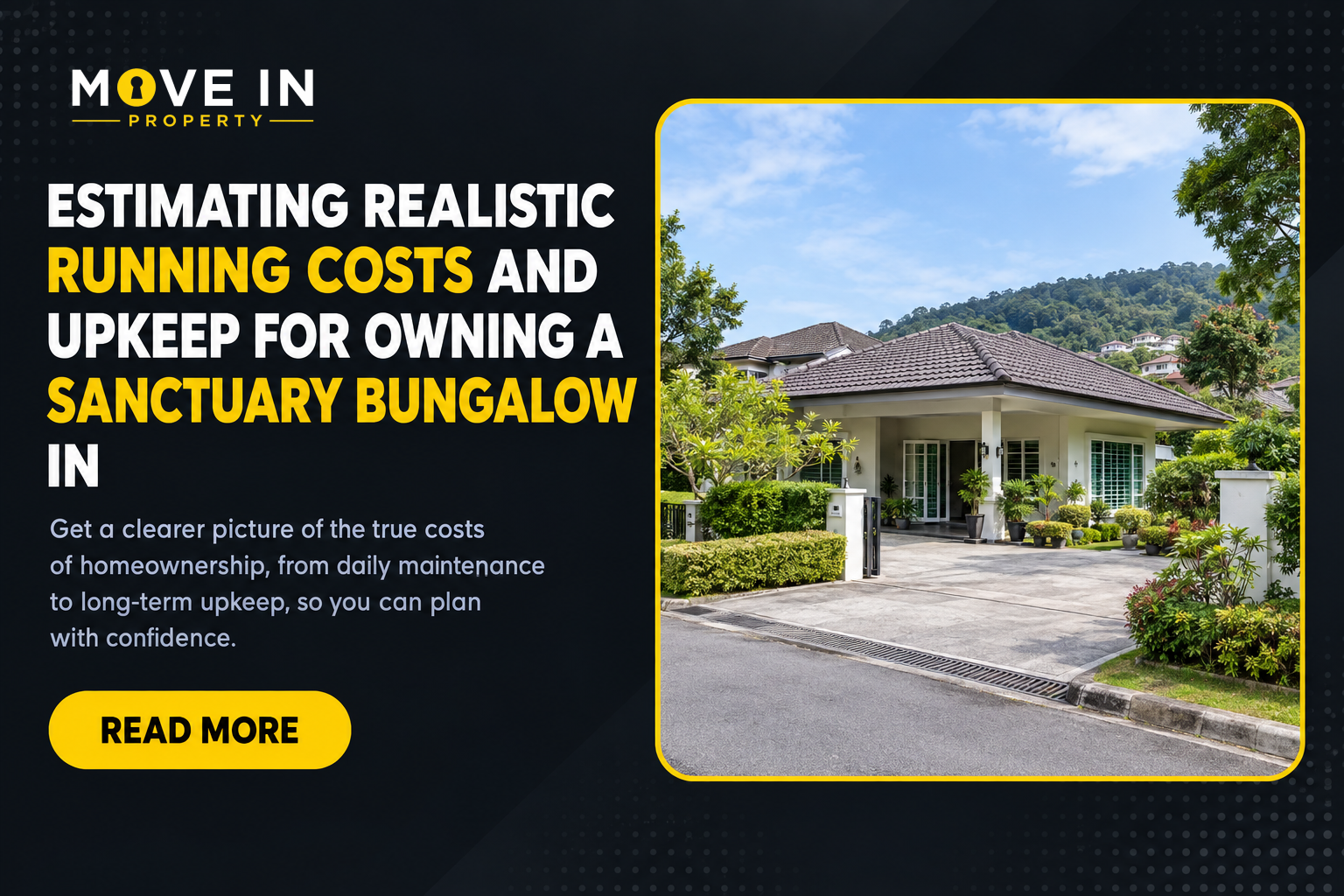
Estimating realistic running costs and upkeep for owning a Sanctuary bungalow in Batu Uban (Gelugor)
There is no responsible single RM figure for owning a Sanctuary bungalow without the specific unit’s documents, bills and condition report. A realistic estimate should combine three elements: fixed ownership charges, variable household costs and an allowance for irregular upkeep. This matters because The Sanctuary is identified in supplied property material as being in Batu Uban, Gelugor, Penang, while individual listings can differ substantially in land area, built-up area, furnishing and renovation status.
Start with the full profile of The Sanctuary bungalows to confirm that you are assessing the correct development. Then request records for the particular house rather than applying figures from another bungalow, semi-detached property or unrelated development.
How to estimate the real running cost of a Sanctuary bungalow
A detached house usually creates more external maintenance than an apartment or smaller landed home. The cost drivers can include a larger building envelope, roof and drainage, outdoor areas, gates, external walls and private systems. The practical question is not whether every item will require immediate spending, but which costs are recurring, which are occasional and which could become a major repair.
The main downside of a bungalow is not simply its purchase price. A detached home normally gives the owner more land, external surfaces and private systems to maintain than an apartment, so the ongoing budget can be less predictable. Roofs, drains, landscaping, gates, security equipment, waterproofing, plumbing and electrical systems all deserve separate attention. Older or renovated homes may require closer inspection because undocumented alterations or deferred work can increase the cost of bringing the property to a reliable standard. Confirm access arrangements, title information, restrictions and the condition of the structure before treating the house as a low-maintenance option.
Descriptions of properties in the Gelugor area include a spacious five-bedroom house, but that description should be treated as an individual listing detail rather than a specification for every Sanctuary bungalow. A larger household may also consume more electricity and water, particularly where several rooms are occupied or air-conditioning is used frequently. Ask for the actual bedroom count, occupancy plan and recent utility records before preparing a budget.
A five-bedroom description may make a particular house sound spacious and welcoming, but it remains a listing-specific detail. Do not use it as the assumed layout for every Sanctuary bungalow. Confirm the actual number and size of rooms, how many people will occupy them and whether the furnishing and fittings match the listing. Then compare recent electricity and water bills with the intended occupancy, especially if several rooms will be used or air-conditioning is common. The word “charming” is not a cost input; the documented floor area, equipment, condition and household pattern are.
Use a three-part cost model
- Fixed charges: Verify any estate, management, security, shared-facility, insurance, local property or ownership-related charges from current documents.
- Variable household costs: Collect electricity, water and other service bills. Consumption may change with occupancy, cooling, pumps, outdoor lighting and the condition of installed equipment.
- Irregular upkeep: Set aside a separate reserve for roofing, waterproofing, drainage, repainting, landscaping, plumbing, electrical work, gates and other replacement or repair events.
This structure prevents a low monthly utility bill from creating a misleading picture of total ownership cost. It also leaves room for items that are not paid every month but can still affect affordability.
Build the recurring-cost table from verified records
Before making an offer, ask the owner or relevant management contact for documents supporting each line in your estimate. Do not assume that security, shared amenities or estate services are included in the purchase price, or that a charge paid by one owner applies identically to another property.
| Cost area | What to obtain | How to use it |
|---|---|---|
| Utilities | Recent electricity and water bills, meter details and occupancy information | Use actual consumption as the starting point, then adjust only for a documented change in household use |
| Management, security and shared facilities | Current statements, notices, rules and confirmation of included services | Separate regular contributions from optional or privately contracted services |
| Insurance and ownership charges | Current policy information and verified property or ownership records | Ask the insurer, conveyancing lawyer or relevant authority about the applicable amount and basis of calculation |
| Grounds and external areas | Landscaping, gate, driveway, drainage and outdoor-equipment service records | Record routine visits separately from replacement work |
| Building systems | Roof, waterproofing, plumbing, electrical, air-conditioning and renovation records | Use inspection findings and contractor quotations to create a repair reserve |
The property identity must also be checked carefully. Supplied descriptions place The Sanctuary at Batu Uban, Gelugor, Penang, and describe a landed residential estate with both semi-detached homes and bungalows. That does not establish the charges, condition or specifications of the house you are considering. Match the address, title information, built-up area, land area and promised fittings to the particular sale documents.
Descriptions of The Sanctuary present it as a low-density landed enclave in Gelugor, sometimes described as gated and guarded, with a mix of semi-detached homes and bungalows. Treat those features as points to verify for the specific house, not as substitutes for current management documents. Confirm the exact address and development name, whether security services apply to the unit, what owners pay for them and whether any shared facilities or private outdoor features are included. This is particularly important where a listing uses broad lifestyle language such as “upscale”, “quiet” or “exclusive”: inspect the location at different times and check actual traffic, noise, privacy and maintenance arrangements. You can also begin with the Move in Property.com property information before requesting unit-level records.
Some property descriptions present The Sanctuary as a “suburban oasis” in Batu Uban, but that is promotional language rather than a running-cost category. Translate the description into checks that affect ownership: confirm whether the particular bungalow is inside a gated and guarded area, what security service is provided, and whether owners contribute to it. Promotional material also refers to a low-density community of 93 residences, lush greenery, a private pool and layouts suitable for multi-generational living. Treat each point as a feature to verify, not a guaranteed specification for every house. Ask whether a pool or landscaped area is private or shared, who maintains it, and whether the layout increases cooling, cleaning, landscaping or repair costs. Record confirmed features and their charges in the property-cost worksheet.
Budget for the upkeep a bungalow actually creates
Maintenance should be planned by system and location, not simply labelled “repairs”. Begin with the building envelope: inspect the roof, gutters, waterproofing, external walls, ceilings and visible signs of water ingress. Drainage should be checked during or after wet weather where possible, because blocked or poorly performing drains may affect the building and external areas.
Next, review the grounds and access points. Landscaping, gates, driveways, boundary areas and security-related equipment can involve routine servicing as well as occasional replacement. If a private pool, pump or other outdoor installation exists at the specific unit, obtain its service history and a quotation from an appropriate contractor; do not assume that an amenity mentioned in promotional material belongs to every property.
Internal systems also need separate attention. Ask for servicing records for air-conditioning, water pumps and other installed equipment. Have questionable plumbing or electrical work assessed by a qualified professional, particularly where the house has been renovated. A routine service allowance is different from a major replacement reserve, so keep both figures separate in your worksheet.
Manageable maintenance costs are part of whether a home functions as a comfortable long-term residence. Natural light, ventilation, storage, secure access and usable outdoor space may improve day-to-day suitability, but they do not remove the need to verify noise, traffic, security arrangements or the cost of maintaining those features.
A home can feel like a sanctuary when its practical conditions support daily life: useful natural light and ventilation, a functional layout, enough storage, secure access and usable outdoor or green space. Those qualities are personal and should be tested against the occupants’ routines, privacy needs and temperature preferences. They also have a financial limit. A pleasant setting does not cancel the cost of maintaining the land, building envelope or installed equipment, and marketing language does not prove that a property is quiet, secure or comfortable. During inspection, visit at more than one time, ask about traffic and noise, and separate lifestyle appeal from the recurring cost shown in your worksheet.
Establish the baseline before forecasting repairs
Do not automatically treat every defect discovered after purchase as a normal owner expense. At handover or viewing, inspect rooms and external areas, take dated photographs and prepare a written defect list. Compare the actual property with the sale and purchase agreement, agreed specifications and promised fittings.
Malaysian homebuyer guidance supplied for this project advises buyers to obtain the vacant-possession notice, keys, title documents where available and the Certificate of Completion and Compliance (CCC). Keep these documents with the inspection record. They help establish what property was handed over and which documents still need to be obtained or checked.
For a more detailed property-condition process, use the Sanctuary bungalow buyer’s checklist alongside this cost worksheet. If the property shows water ingress, extensive undocumented renovation, unusual electrical work, drainage problems or unclear title information, obtain targeted professional and legal advice before relying on a repair estimate.
Decide whether the bungalow fits your budget
The ownership decision should be based on the verified recurring total plus a realistic upkeep reserve, not on the purchase price alone. A bungalow may be unsuitable if the sustainable household budget covers ordinary bills but leaves no capacity for external maintenance, insurance, periodic servicing or a significant repair.
Use these decision conditions:
- Proceed to detailed budgeting when the property identity, documents, recent bills and management information are available and the inspection shows no unexplained high-risk issue.
- Inspect further before negotiating when the house is older or renovated, records are incomplete, or there are signs of roof, waterproofing, drainage, electrical or plumbing problems.
- Pause or reconsider when important charges remain unknown, the property condition cannot be documented, or the recurring cost plus reserve exceeds the amount your household can sustain.
Where figures are missing, do not fill the gap with an average from another listing. Request the relevant document, obtain a contractor quotation or ask a qualified adviser to confirm the applicable charge. Recalculate the budget before signing or making an unconditional commitment.
Complete your property-cost worksheet before committing
Record the unit’s address, land and built-up details, bedroom count, occupancy plan, renovation history and included fittings. Add recent utility bills, insurance information, management or security statements, service records and inspection findings. Then obtain quotations for any visible or suspected work, separating routine maintenance from one-off repairs and long-term replacement items.
The result should show three figures: expected regular spending, variable household spending and the reserve required for irregular upkeep. Review the worksheet with the owner, management contact, conveyancing lawyer and relevant qualified contractors where necessary. This approach gives you a defensible basis for deciding whether the Sanctuary bungalow is financially comfortable, requires a conditional offer or should be rejected until material uncertainties are resolved.
Frequently Asked Questions
Why can’t I use one average monthly cost for a Sanctuary bungalow?
You cannot use one reliable average because units differ in land area, built-up area, renovation status, occupancy, fittings and external maintenance needs. Use the specific house’s bills, documents, inspection findings and quotations instead.
Which documents should I request before estimating ownership costs?
Request the sale and purchase documents, available title information, vacant-possession notice, keys, CCC, recent utility bills, insurance details, management or security statements and records for renovations or major servicing. Ask a conveyancing lawyer to clarify any unresolved legal property issue.
What should I do if a bungalow has visible water damage?
Document the affected areas with dated photographs, identify possible roof, waterproofing or drainage causes, and obtain a targeted inspection and written quotation. Do not treat the issue as a minor decoration cost until its source and likely repair scope are understood.
Make the next estimate property-specific
Before committing to a Sanctuary bungalow in Batu Uban, collect the unit records, inspect both interior and exterior areas, and calculate regular costs separately from the upkeep reserve. Use the development profile and buyer checklist as starting points, then confirm unresolved charges and repairs with the relevant owner, management contact, lawyer or qualified contractor.